
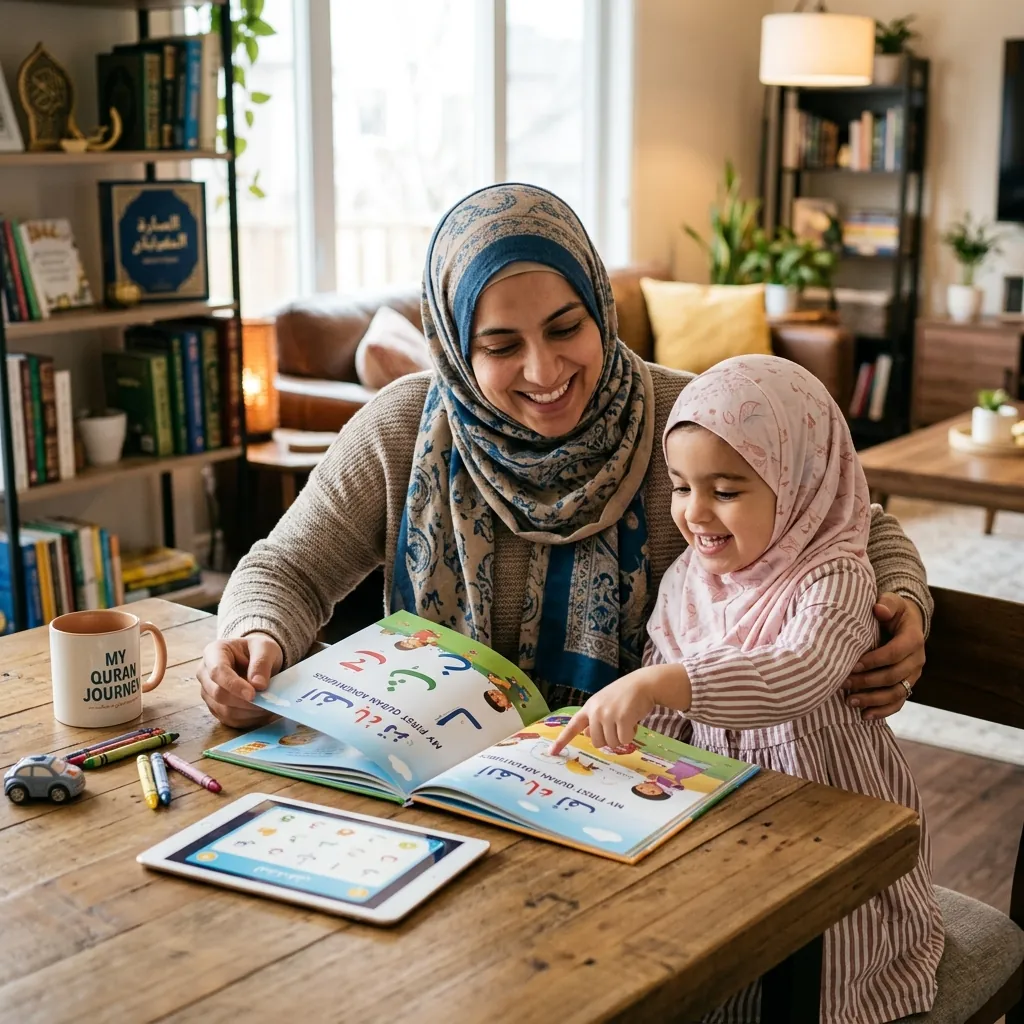
Parents play a vital role in their child's Quran journey by creating a positive learning environment, encouraging consistency, celebrating progress, and leading by example. A child's success in Quran learning depends not only on a qualified teacher but also on the love, support, and encouragement they receive at home.
Table of Contents
- Why Parents Matter in Quran Learning
- 1. Be a Role Model
- 2. Create a Quran-Friendly Home
- 3. Encourage Consistency Instead of Perfection
- 4. Set a Daily Quran Routine
- Coming in Part 2
Introduction
Every parent wants to give their child the best possible future. Alongside academic success and personal development, one of the greatest gifts parents can offer is a strong relationship with the Quran.
Many parents believe that once they enroll their child in an online Quran class, their responsibility is complete. In reality, a teacher and parents work as a team. The teacher provides instruction and guidance, while parents create the environment that helps those lessons take root.
Children thrive when learning continues beyond the classroom. Simple daily encouragement, regular practice, and a positive atmosphere at home can make a remarkable difference in their confidence and progress.
Whether your child is learning Noorani Qaida, improving Tajweed, memorizing the Quran, or studying Islamic teachings, your support can transform the learning experience from a scheduled lesson into a lifelong connection with the Book of Allah.
Why Parents Matter in Quran Learning
A qualified Quran teacher teaches the lesson, but parents shape the child's attitude toward learning.
Children naturally observe the habits and priorities of the adults around them. When they see that the Quran is respected and valued at home, they are more likely to develop the same attitude.
The Prophet ï·º said:
"Each of you is a shepherd, and each of you is responsible for those under your care."
(Sahih al-Bukhari, Sahih Muslim)
Parents have a responsibility to nurture not only their child's physical and academic growth but also their spiritual development.
Supporting Quran learning does not require being an expert in Tajweed or Arabic. It requires consistency, encouragement, and genuine interest in your child's progress.
1. Be a Role Model
Children often imitate what they see more than what they hear.
If they regularly see you reading the Quran, listening to its recitation, or making time for Islamic learning, they begin to understand that the Quran is an important part of everyday lifeâ€â€not something limited to class time.
You don't need to read for an hour every day. Even spending 10–15 minutes with the Quran where your child can see you sends a powerful message.
Practical Ideas
- Read a few pages of the Quran after Fajr or Maghrib.
- Listen to Quran recitation while driving or at home.
- Read the translation of a few verses together.
- Share a simple lesson or reflection from the Quran during family time.
Children who witness these habits are more likely to develop similar routines.
2. Create a Quran-Friendly Home
The environment at home plays a significant role in developing positive habits.
A home that values the Quran encourages children to look forward to learning rather than viewing it as another task.
Simple ways to create this atmosphere include:
- Keeping a clean, dedicated place for Quran study.
- Reducing distractions during lesson and revision time.
- Displaying Islamic books within easy reach.
- Maintaining a peaceful environment during Quran study.
- Encouraging respectful handling of the Mushaf.
Small changes can help children associate Quran learning with comfort, focus, and respect.
3. Encourage Consistency Instead of Perfection
One of the biggest mistakes parents make is expecting rapid progress.
Every child learns differently. Some memorize quickly, while others need more repetition. Progress should be measured by consistency rather than speed.
Allah loves deeds that are consistent, even when they are small.
Instead of asking: "How many pages did you memorize today?"
Try asking:
- What new lesson did you enjoy today?
- Which verse was your favorite?
- Would you like to read it together?
- Can you teach me what you learned?
These conversations build confidence rather than pressure.
4. Set a Daily Quran Routine
Learning once or twice a week is rarely enough for long-term improvement.
Even 10–20 minutes of revision each day can significantly improve reading fluency and memorization.
A simple family routine might look like this:
| Time | Activity |
|---|---|
| After Fajr | Read a few verses together |
| After School | Revise the day's lesson |
| After Maghrib | Practice Tajweed or memorization |
| Before Bed | Listen to the day's verses |
Keeping the schedule simple makes it easier to maintain over time. Remember, consistency is more valuable than long but irregular study sessions.
Key Takeaways
- Parents are partners in their child's Quran education.
- Children learn more from example than instruction alone.
- A supportive home environment encourages steady progress.
- Daily revision, even for a short time, is more effective than occasional long sessions.
- Praise effort and consistency rather than focusing only on results.
Coming in Part 2
In the next part, we'll discuss:
- How to communicate effectively with your child's Quran teacher.
- Ways to make Quran learning enjoyable without compromising respect.
- How to motivate children during difficult stages.
- Why celebrating small achievements builds lifelong confidence.
- Common parenting mistakes that can discourage Quran learning.
Support Your Child's Journey
At Quranic Seekers Academy, our experienced teachers work alongside parents to nurture a lifelong love for the Quran in a supportive, engaging environment.
Book a Free Trial for Your Child