
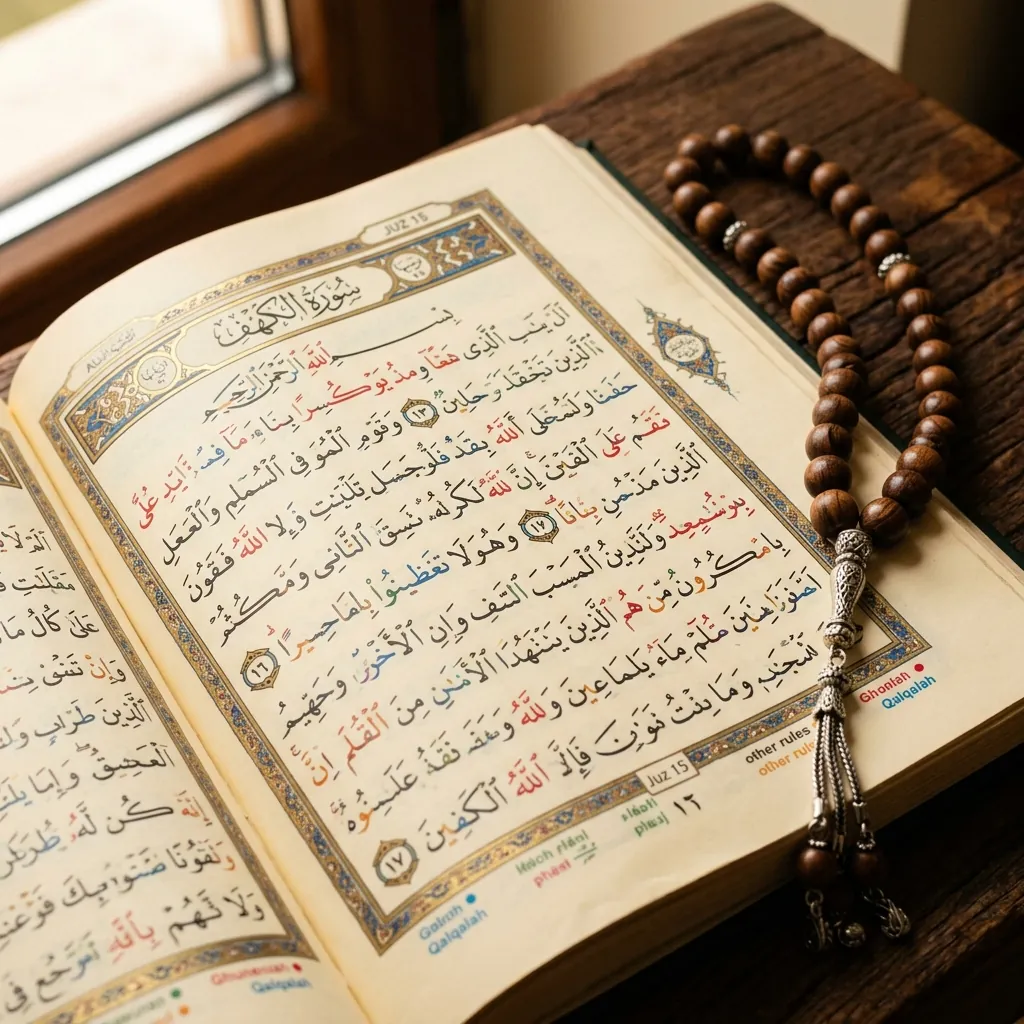
Tajweed is the set of rules that ensures the Quran is recited exactly as it was revealed to Prophet Muhammad ï·º. It helps Muslims pronounce every Arabic letter correctly, apply the proper characteristics of each sound, and avoid mistakes that may alter the meaning of Allah's words.
Table of Contents
- What Is Tajweed?
- Why Is Tajweed Important?
- Preserving the Words of Allah
- The Role of Makharij (Articulation Points)
- Tajweed Is About Accuracy, Not Speed
- Coming in Part 2
Introduction
The Quran is the literal word of Allah, revealed in the Arabic language to Prophet Muhammad ï·º through Angel Jibreel (Gabriel). Every letter, every pronunciation, and every pause has been carefully preserved through generations of reciters.
Learning to recite the Quran correctly is therefore not simply about reading Arabicâ€â€it is about preserving the exact words that Allah revealed.
This is where Tajweed becomes essential.
Tajweed teaches Muslims how to pronounce each letter from its correct articulation point (Makhraj), observe the characteristics of letters, and apply the rules that ensure the Quran is recited accurately and beautifully.
Whether you are a beginner, a parent teaching your child, or an adult returning to Quran learning, understanding the importance of Tajweed is one of the first steps toward improving your recitation and deepening your connection with the Quran.
What Is Tajweed?
The word Tajweed comes from the Arabic root ج و د (j-w-d), which means to improve, to make better, or to perfect something.
In the context of Quran recitation, Tajweed refers to the science of giving every letter of the Quran its due right by:
- Pronouncing each letter from its correct articulation point (Makhraj).
- Applying the correct characteristics (Sifaat) of every letter.
- Observing rules related to elongation (Madd), nasalization (Ghunnah), stopping (Waqf), and joining words.
- Reciting the Quran as it was taught by Prophet Muhammad ï·º.
Tajweed is not about making your voice sound musical. Its purpose is to preserve the authenticity and accuracy of Allah's words.
Why Is Tajweed Important?
Imagine reading an important legal document but changing certain letters or words by mistake. The meaning could change completely.
The same principle applies to the Quran.
Arabic contains letters that may sound similar to non-Arabic speakers, but each has a unique pronunciation. Replacing one letter with another can sometimes change the meaning of an entire word.
For example:
- Confusing ص with س
- Pronouncing ض like د
- Mixing Ø with Ù‡
- Replacing Ù‚ with Ùƒ
These may seem like small pronunciation differences, but in Arabic they represent completely different letters.
Tajweed helps preserve the exact wording revealed by Allah.
Allah says:
"And recite the Quran with measured recitation."
(Quran 73:4)
This verse forms one of the strongest foundations for learning proper Quran recitation.
Preserving the Words of Allah
One of the greatest blessings Allah has granted this Ummah is the preservation of the Quran.
Allah says:
"Indeed, it is We who sent down the Reminder, and indeed, We will surely preserve it."
(Quran 15:9)
The preservation of the Quran is not limited to its written text. It also includes:
- Correct pronunciation.
- Accurate recitation.
- Proper transmission from teacher to student.
- Preservation of every letter and sound.
For over fourteen centuries, Muslims have learned the Quran directly from qualified teachers, who themselves learned from their teachers in an unbroken chain leading back to Prophet Muhammad ï·º.
Tajweed is one of the means through which this preservation continues today.
The Role of Makharij (Articulation Points)
One of the most important aspects of Tajweed is understanding the Makharij, or articulation points of the Arabic letters.
Every Arabic letter originates from a specific place in the mouth or throat. Pronouncing a letter from the wrong articulation point can change its sound and, in some cases, its meaning.
For example:
- Ù‚ (Qaf) is pronounced from the back of the tongue touching the soft palate.
- Ùƒ (Kaf) is produced slightly farther forward in the mouth.
Although these letters may sound similar to beginners, they are distinct letters with different articulation points.
Likewise:
- Ø and Ù‡
- ع and أ
- ذ and ز
- ت and ط
Each pair requires careful practice under a qualified teacher to master.
Learning Makharij helps students improve pronunciation, read with greater confidence, reduce common mistakes, and preserve the meaning of Quranic words.
Tajweed Is About Accuracy, Not Speed
Many new learners believe that finishing the Quran quickly is the primary goal.
However, Islam encourages us to prioritize correct recitation over speed.
The Prophet ï·º recited the Quran with clarity, calmness, and reflection. His companions carefully learned both the words and the manner of recitation from him.
Reading slowly while applying Tajweed is far more beneficial than rushing through verses while making pronunciation mistakes.
As your confidence grows, your fluency will naturally improve without sacrificing accuracy.
Key Takeaways
- Tajweed preserves the authentic pronunciation of the Quran.
- Every Arabic letter has a unique articulation point (Makhraj).
- Proper pronunciation helps prevent mistakes that may alter meanings.
- The Quran should be recited with care, clarity, and respect.
- Learning Tajweed is a lifelong journey that strengthens both recitation and connection with Allah.
Coming in Part 2
In the next section, we'll cover:
- How pronunciation mistakes can change meanings.
- Spiritual benefits of learning Tajweed.
- Is Tajweed obligatory?
- Common Tajweed mistakes beginners make.
- Practical steps to improve your Tajweed every day.
Perfect Your Recitation
At Quranic Seekers Academy, our qualified teachers can help you master Tajweed rules and correct your pronunciation, whether you're a beginner or looking to perfect your recitation.
Book Your Free Trial Today